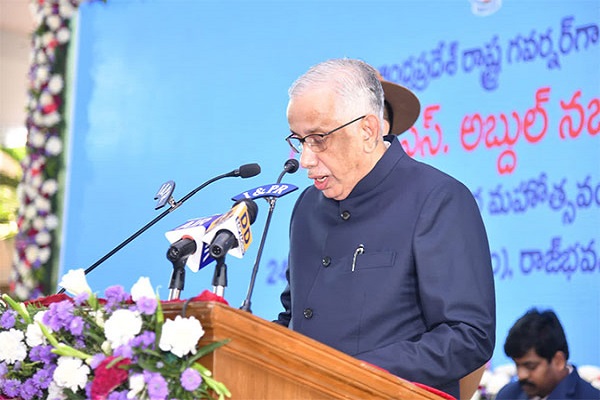
A Distinguished Journey Through India's Highest Courts — From Karnataka High Court to the Supreme Court of India
Building a foundation of judicial excellence in one of India's most distinguished High Courts

Elevated to the Karnataka High Court bench in 2003, Justice Nazeer brought a practitioner's depth of experience and a scholar's breadth of constitutional knowledge to the judiciary.
The Karnataka High Court, one of India's oldest and most respected judicial institutions, provided Justice Nazeer with the ideal forum to apply his deep understanding of constitutional law. During his tenure, he presided over a wide range of cases spanning constitutional matters, civil disputes, criminal appeals, and administrative law, earning a reputation for delivering balanced, well-reasoned judgments that drew upon both the principle of stare decisis and a nuanced understanding of contemporary social realities.
His judgments at the Karnataka High Court were notable for their meticulous analysis of constitutional provisions, their engagement with international legal scholarship, and their sensitivity to the lived experiences of ordinary citizens. Whether dealing with matters of personal liberty, administrative overreach, or the interpretation of statutory provisions, Justice Nazeer consistently demonstrated a judicial temperament that combined intellectual rigour with practical wisdom.
His contributions to the development of High Court jurisprudence earned him recognition not only within Karnataka but across the Indian legal fraternity, laying the groundwork for his eventual elevation to the Supreme Court of India.
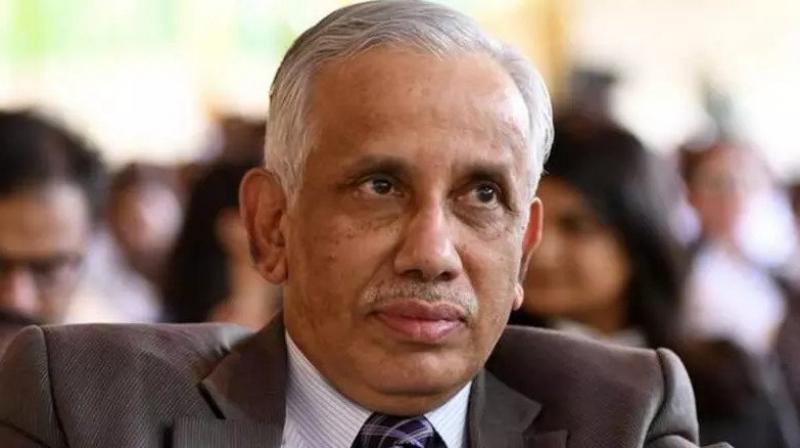
Serving on the highest court of the world's largest democracy
In 2017, Justice Syed Abdul Nazeer was elevated to the Supreme Court of India — an appointment that recognized both his extraordinary legal acumen and his unwavering commitment to constitutional principles.
The Supreme Court of India occupies a unique position in the world's constitutional systems — it is not merely the final arbiter of legal disputes but the ultimate guardian of fundamental rights and the interpreter of the supreme law of the land. Serving on this bench placed Justice Nazeer at the very heart of India's constitutional framework, where his decisions would shape the rights and obligations of over a billion citizens.
During his tenure at the Supreme Court, Justice Nazeer was part of several constitutional benches — the larger benches convened to decide the most fundamental questions of constitutional law. His contributions to these benches were marked by careful legal reasoning, a deep understanding of constitutional history, and a commitment to ensuring that the Court's decisions were consistent with both the text and spirit of the Constitution.
His judgments on the apex court demonstrated an exceptional ability to navigate the complex intersection of law, society, and governance, earning him recognition as one of the most thoughtful and principled jurists of his generation.
The cases and constitutional deliberations that shaped India's legal landscape
Justice Nazeer was part of the five-judge constitutional bench that unanimously decided the historic Ayodhya case in 2019. This landmark verdict, which resolved one of India's most longstanding and sensitive legal disputes, demonstrated the Court's ability to adjudicate complex matters involving faith, history, and constitutional law while upholding the principles of justice, equity, and secularism.
Part of benches that examined the essential practices doctrine — a crucial area of constitutional jurisprudence that deals with the intersection of religious freedom and fundamental rights. These deliberations contributed to the evolving understanding of how the Constitution balances religious autonomy with the guarantee of individual rights and social reform.
Contributed to the development of fundamental rights jurisprudence through judgments that expanded the scope of Articles 14, 19, and 21 of the Constitution. His judicial reasoning in these cases reflected a commitment to ensuring that constitutional protections remained vibrant, accessible, and responsive to the evolving needs of Indian society.
Engaged with complex questions about the relationship between personal laws of different communities and the fundamental rights guaranteed by the Constitution. His contributions to this jurisprudence reflected a nuanced understanding of India's legal pluralism within the framework of constitutional supremacy.
The Constitution is the living testament of a nation's highest aspirations. Every judgment must not only resolve the dispute at hand but also strengthen the constitutional framework that protects the rights and dignity of every citizen.
The intellectual principles that guided his approach to constitutional interpretation and judicial reasoning
Justice Nazeer's judicial philosophy is characterized by a balanced approach to constitutional interpretation — one that respects the text of the Constitution while remaining alive to its underlying purposes and values. He has consistently held that the Constitution must be read as a coherent whole, with each provision interpreted in light of the document's overall scheme and its foundational commitment to justice, liberty, equality, and fraternity.
His approach to statutory interpretation combines textualist and purposivist methods, ensuring that legislative intent is given effect without doing violence to the language of the statute. This balanced methodology has produced judgments that are both legally rigorous and practically just.
Every interpretation begins with respect for the language of the Constitution. The text is the primary guide, and any departure from its plain meaning requires compelling justification grounded in constitutional purpose.
Beyond the letter, Justice Nazeer seeks the spirit and purpose of constitutional provisions, ensuring that interpretation serves the goals of justice, dignity, and democratic governance that the Constitution was designed to achieve.
Drawing on constitutional developments in other democratic jurisdictions to enrich Indian constitutional interpretation, while recognizing the unique features and context of India's constitutional framework.
Discover how Justice Nazeer has transitioned from interpreting the Constitution to serving as its guardian in the governance of Andhra Pradesh.
Governor's Role